I spent years being told to stop overthinking and just ride. I never quite managed it. That habit of asking why ran through a long corporate leadership career before it followed me into the arena, and it's still the thing that shapes how I coach. The same skill, dressed in riding boots instead of a blazer.
Today I work with amateur and competitive riders on the part of riding that happens before the aids: breath, the nervous system, and how the brain organises the body in the saddle.
I'm a 4-Star Train Your Seat Rider Biomechanics Coach, an accredited Breath Coach and an Equestrian Australia Level 2 Dressage Steward, with 30 years in dressage and more than 15 years coaching internationally. My approach is brain-based, following Z-Health principles, and shaped by a long-time love of somatic movement in the Feldenkrais tradition.
For clubs and event organisers, I give talks, demonstrations and clinic days, in person across Australia, overseas on request and online anywhere, shaped around whatever will serve your event and your riders. For editors, the articles below are ready to publish.
A rider coach who always needed to know why.
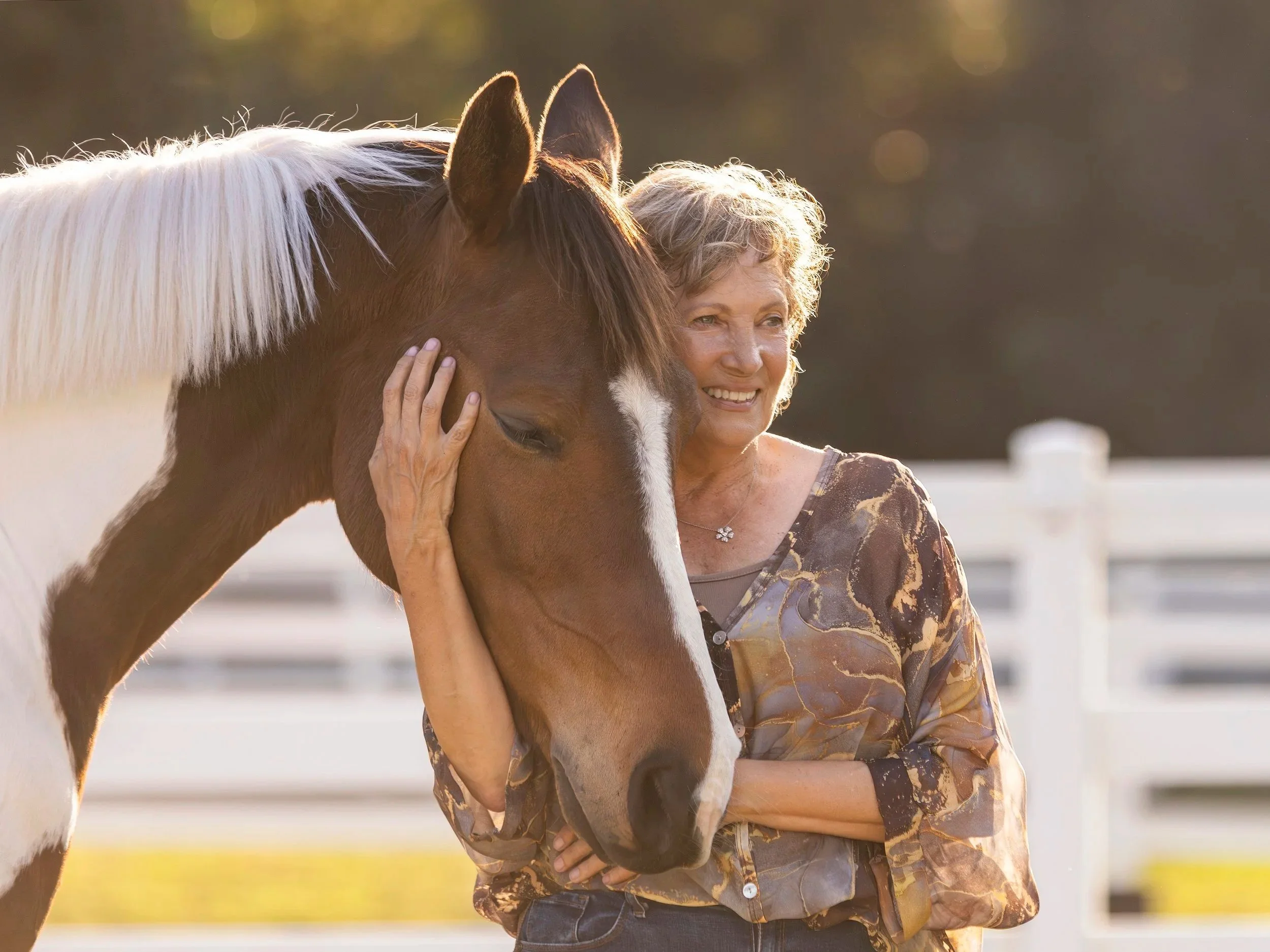
Photography: Concept Photography by Jen
A taste of how I teach.
A short extract from a masterclass I taught as Inside Ride, sponsored by Equisk and shared here with their permission. If you'd like the full session, you can watch it on Equisk's YouTube channel.
ArticlesArticles available for publication
These pieces are ready for editors. Each draws on research in motor learning, the nervous system and breath, and each says plainly where that evidence is strong and where it's still being argued. If one suits your readers, get in touch and I'll send the full manuscript.
Congratulations, You've Gotten Worse
For amateur and competitive riders · about 1,500 words
Many riders reach a point where their riding falls apart just after they've started working on something new. This piece maps that experience onto a dressage version of the four stages of learning, and corrects the popular myth that Maslow came up with it. It uses Rich Masters' reinvestment theory to explain why thinking about a movement can make it worse, and gives riders a practical way through each stage, especially the uncomfortable second one.
So this is me. I was the rider who thought she had a decent sitting trot. Sure, the horse was a little heavy on one rein, and I had what I generously called natural bounce, but I could hold it together, more or less, and nobody had told me otherwise. Then I had one biomechanics lesson with a well-known international coach, and by the end of it I couldn't sit the trot at all, not wobblier, not worse, just gone, along with a fair portion of my confidence that I could ride at all, and I remember genuinely weighing up whether it was too late to take up tennis instead.
Bracing Teaches Bracing
For riders and coaches · about 800 words
Taking away the stirrups is one of the oldest fixes in riding instruction. For a rider who is already gripping, it often backfires. Drawing on Nikolai Bernstein's work on how the body "freezes" movement under challenge, and on Porges' polyvagal theory, this piece explains why a rider who feels unsafe locks down rather than loosens, and why stability has to be built before the challenge, not demanded by it.
There's a fix many riders have been handed at some point, the one that comes out the moment someone grips and bounces in sitting trot. Stirrups off, onto the lunge, and the promise that if they just relax and let their body find it, their seat will show up on its own. I understand exactly why coaches reach for it, the logic underneath it is sound, take away the crutch and the body has no real choice but to organise itself properly. I have used a version of it myself. What I want to make the case for here is that for a specific and common rider, this exact fix quietly teaches their nervous system to do more of the very thing we are trying to undo.
The Breath Between You
For riders across disciplines · about 1,100 words
Riders are often told their horse can feel their breath. This piece looks at what the evidence actually supports. It draws on Linda Keeling's well-known "umbrella study", in which horses' heart rates rose in step with their riders' anticipation of a scare that never came, and on what slow, long exhales do to the rider's own physiology. It's upfront about where the science is still unresolved, and offers a simple exercise to try at halt.
You know the moment. You've asked for halt, the horse has given it, and a couple of seconds later something in the two of you settles. The horse blows out a long breath through its nose. A second later, you feel your own breath settling deeper.
That's co-regulation: two nervous systems influencing each other in real time, mostly without either of you deciding to. It happens through most of a ride, and breath is the one part of it a rider can actually reach in and use on purpose.
Why Your Riding Habits Are Hardwired (And How to Actually Replace Them)
For riders and coaches · about 1,100 words
Every rider has a habit they can't shake, and "just stop doing it" rarely works. This piece explains why movement habits are stored as automatic circuits rather than ideas, drawing on basal ganglia research and Gabriele Wulf's work on attentional focus. It argues for replacing a habit rather than suppressing it, with images, sensation and breath giving the nervous system something new to build.
Every rider has a habit they can't seem to shake. A hand that creeps up the neck under pressure. A seat that tips forward into the downward transition. A breath that disappears the moment the canter departs. Riders often describe these patterns as failures of discipline, as if the fix were simply "trying harder" or "remembering" next time.
It rarely works. And there's a reason for that, rooted in how movement is actually built and stored in the brain.
Interested in one of these?
Get in touch to request a manuscript, and tell me a little about your publication and readers.