A rider story
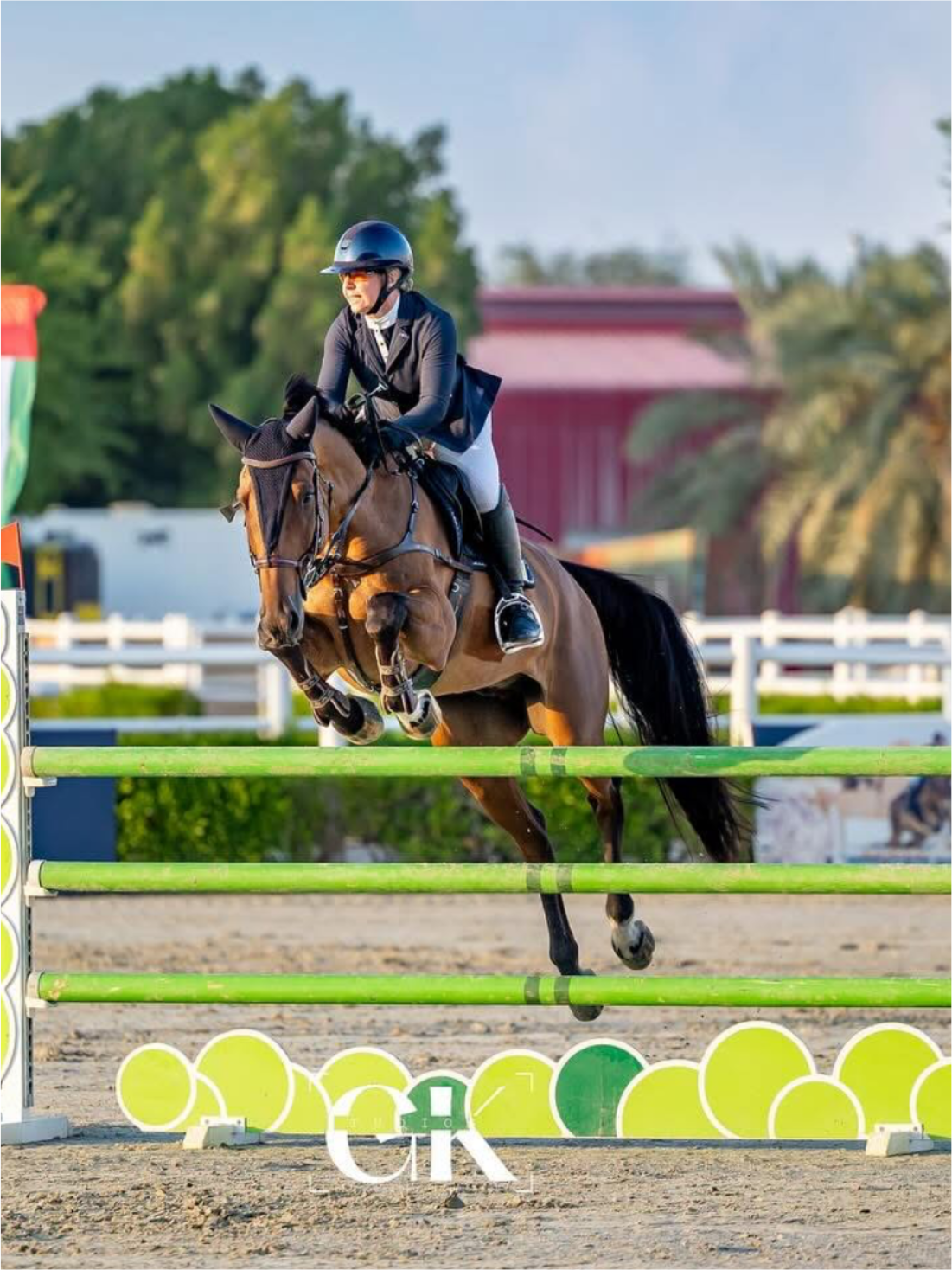
Sophia A. Photo CK Studio
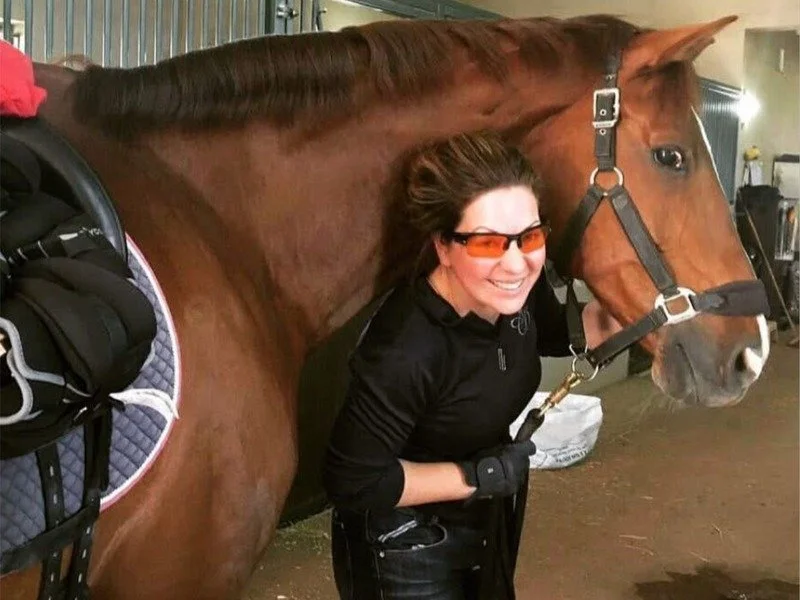
Sophia A.
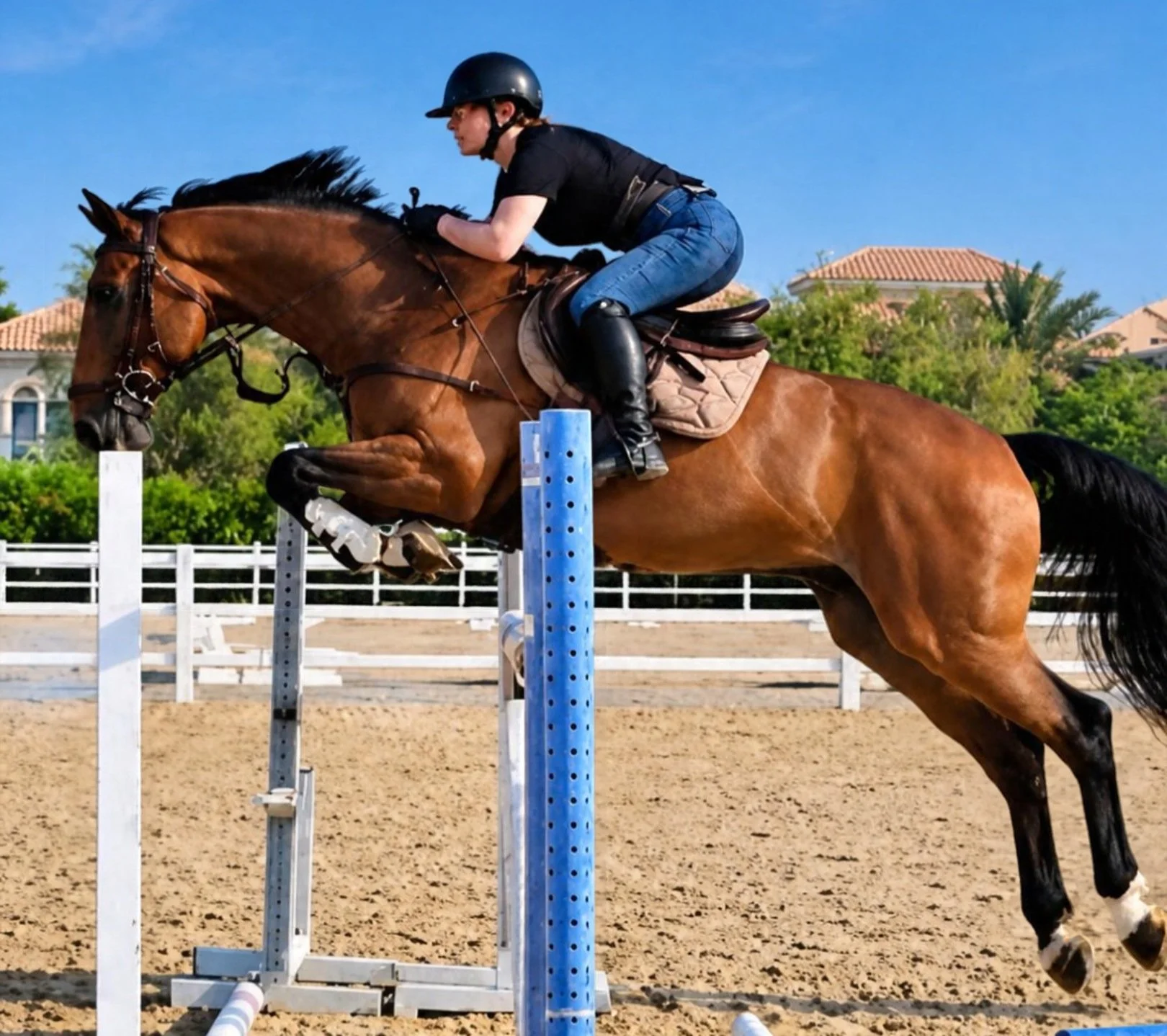
Sophia A.
“Jumping is dressage
with obstacles along the way.”
Sophia is an FEI 2* and 3* showjumper, competing from 1.20m to 1.55m. Past lives include a UAE national eventing title, a PSG World Dressage Challenge win and a stint riding side saddle. She works full time in a corporate job, buys her horses young, unproven and without the big price tag, and brings them through the levels herself.
The athlete first
“I have always been an athlete. I raced track athletics, including the heptathlon, at UK national level for most of my teens and early twenties. Was I the most talented? Probably not. But I trained differently, and I have always looked for ways to get the most out of my performance through science and physiology.”
How a showjumper ended up doing dressage work
“The first horse I owned as an adult was very quirky, so I adapted my riding to suit him. Only it didn’t suit any other horse. So I bought a dressage horse and set about improving my flatwork. It became a bit of an addiction for a while. I still love my flatwork, but I’ve gone back to what dressage riders like to call the dark side: showjumping.”
Trusting the feel
Once Sophia stopped adapting to each horse and started looking at her own seat, her body and her feel, things began to shift. Working with Yolanda was part of that journey.
“My horses became softer and more supple once I understood the influence of my position and my aids. I have more feel now. If something isn’t going to plan, I know it’s usually me and not the horse. I can break down what’s not right, adjust my position, and get the response I’m looking for.”
The cues she took with her
Trusting the feel gave Sophia something to work with. The cues came straight out of her coaching with Yolanda, some for the jump, some for the flat, and she still uses all of them.
Over the fence, it was a handful of very physical pictures: “Lead with your belly button. Fan your bottom over the fence, then narrow on landing.” Sophia has carried that one into her gym work too. In the turns, she thinks about connecting her inside hip to the horse’s outside shoulder.
The ones she keeps coming back to:
Inside hip to outside shoulder.
Lift the horse in transitions using your core, and the same for the half-halt.
Show off the Chanel brooch on your outside lapel (this one sorts out a shoulder that wants to drop)
Velcro the sides of your arms to your body.
Close your shoulder blades rather than pulling on the reins.
“I use a similar style of cueing when I’m helping someone in the arena, instead of shouting outside rein and more leg. Cues are what people remember. They’re what I remember too. I watch riders struggling, pop over, quote a few things from Yolanda, and within minutes there’s a huge improvement.”
Why the same instruction never works
“The definition of insanity is doing the same thing and expecting a different result. Day in, day out, I listen to instructors screaming the same instructions, lesson after lesson, and nothing improves. Why? Because the rider can’t connect the instruction to what to do with their body. When they do get it right, it’s by chance, and they have no idea how to repeat it. That’s why I love Yolanda’s work. She joins the dots and helps the rider’s brain train itself to do something different, and to remember it under pressure.”
For the jumper who thinks position work is for dressage riders
“Jumping is dressage with obstacles along the way. We all want to improve, and very often it’s us, not the horse, who is stopping that from happening. That’s why I keep refining my position, making small changes and deepening my feel and connection, for the benefit of my body, my sport and, most importantly, the welfare of my horses.”
Sophia A.
Breathe. Move. Connect.
Yolanda Delport · Inside Ride
